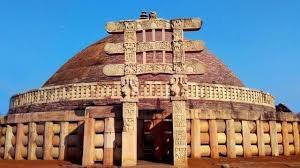
Sanchi Tourist Places Sanchi, a UNESCO World Heritage site in Madhya Pradesh, India, is famous for its ancient Buddhist monuments, stupas, temples, and historical relics. It is one of the most significant Buddhist pilgrimage sites in the world. The serene environment, rich heritage, and intricate architecture make Sanchi a must-visit destination for history lovers and spiritual seekers.
Quick Overview of Sanchi Tourist Places
| Place | Attraction | Significance |
|---|---|---|
| Sanchi Stupa | Hemispherical dome with intricately carved gateways | UNESCO World Heritage site |
| Ashoka Pillar | Polished sandstone pillar with four-lion capital | National Emblem of India |
| Great Bowl | Large stone bowl used by monks | Symbol of Buddhist monastic life |
| Gupta Temple | Ancient temple with classic architectural style | 4th-5th century temple |
| Sanchi Museum | Artifacts, sculptures, and relics from Buddhist era | Archaeological treasure |
| Udaygiri Caves | Rock-cut caves with inscriptions and sculptures | Jain and Hindu significance |
| Heliodorus Pillar | A stone column erected by Greek ambassador | Indo-Greek historical connection |
| Satdhara Stupa | Smaller stupas in a tranquil setting | Buddhist historical remains |
1. Sanchi Stupa – The Iconic Monument
The Sanchi Stupa, built by Emperor Ashoka in the 3rd century BCE, is the most prominent attraction. This grand hemispherical structure, adorned with four elaborately carved gateways, narrates the life and teachings of Lord Buddha.
Highlights:
- The Four Toranas (Gateways): Each gateway is intricately carved with Buddhist stories and symbols.
- Dome and Harmika: Representing cosmic unity and the heavens.
- Relics of Buddha: Said to contain the ashes of Buddha and his disciples.
Best Time to Visit: October to March
Entry Fee: INR 40 (Indians), INR 600 (Foreigners)
Timings: 6:30 AM – 6:30 PM
2. Ashoka Pillar – The National Emblem of India
Located near the main stupa, the Ashoka Pillar is a masterpiece of Mauryan craftsmanship. The pillar originally had a four-lion capital, which now resides in the Sanchi Museum.
Key Features:
- Polished Sandstone: Made of a single stone piece.
- Four-Lion Capital: Inspired the Indian National Emblem.
- Ashokan Edicts: Carved inscriptions spreading Buddhist teachings.
3. The Great Bowl – Symbol of Buddhist Monastic Life
The Great Bowl (Grand Kunda) is a massive stone vessel used by Buddhist monks to collect food offerings. It signifies the monastic discipline of the Buddhist order.
What to See:
- Huge Stone Structure: Made from a single block of stone.
- Symbol of Community Living: Depicts how monks lived a simple and shared life.
4. Gupta Temple – A Classic Example of Ancient Indian Architecture
Dating back to the 4th-5th century CE, the Gupta Temple showcases the simplicity and elegance of early Hindu temple architecture. It is one of the earliest known Hindu temples in India.
Architectural Highlights:
- Flat Roof: Unlike later temples with towering shikharas.
- Minimal Ornamentation: Focus on structural beauty.
- Historical Significance: Represents the transition from wooden to stone temples.
5. Sanchi Archaeological Museum – A Treasure Trove of History
The Sanchi Museum, maintained by the Archaeological Survey of India (ASI), houses a vast collection of artifacts from Sanchi and surrounding areas.
Must-See Exhibits:
- Ashoka’s Lion Capital: The original piece from the pillar.
- Buddhist Sculptures: From different periods.
- Ancient Coins and Inscriptions: Providing insights into history.
Timings: 9:00 AM – 5:00 PM (Closed on Fridays)
Entry Fee: INR 10 (Indians), INR 250 (Foreigners)
6. Udaygiri Caves – The Ancient Rock-Cut Wonder
Located about 13 km from Sanchi, the Udaygiri Caves are a set of 20 rock-cut caves from the 5th century CE, featuring Hindu and Jain sculptures.
Major Attractions:
- Cave 5: Houses the famous reclining Vishnu carving.
- Cave 6: Depicts Goddess Durga slaying Mahishasura.
- Jain Inscriptions: Signifying religious harmony.
7. Heliodorus Pillar – A Greek Connection in India
The Heliodorus Pillar, also known as the “Khamba Baba,” was erected by a Greek ambassador named Heliodorus in the 2nd century BCE.
Why Visit?
- Indo-Greek Influence: Shows cultural exchanges between India and Greece.
- Vasudeva Inscription: Proof of early Krishna worship.
- Unique Architecture: A fusion of Greek and Indian styles.
8. Satdhara Stupa – A Hidden Gem Near Sanchi
Located about 10 km from Sanchi, Satdhara Stupa is a lesser-known but historically significant Buddhist site.
What to Explore:
- Group of Stupas: Smaller than Sanchi but equally historic.
- Peaceful Environment: Ideal for meditation.
- Relics of Buddhist Monks: Excavated remains of monks.
Best Time to Visit Sanchi
| Season | Months | Weather & Travel Experience |
|---|---|---|
| Summer | April – June | Hot and dry, not ideal for travel |
| Monsoon | July – September | Lush green surroundings, moderate weather |
| Winter | October – March | Best time to visit, pleasant weather |
How to Reach Sanchi
| Mode of Transport | Details |
|---|---|
| By Air | Nearest airport: Bhopal (55 km) |
| By Train | Nearest railway station: Sanchi (Direct connectivity to major cities) |
| By Road | Well-connected via NH-86 from Bhopal, Vidisha, and other cities |
Accommodation Options in Sanchi
| Hotel/Resort | Category | Location |
|---|---|---|
| Gateway Retreat | Luxury | Near Sanchi Stupa |
| MPT Jungle Resort | Mid-range | Close to Satdhara Stupa |
| Budget Stays & Lodges | Budget | Various locations |
Conclusion
Sanchi is a paradise for history lovers, spiritual seekers, and architecture enthusiasts. Whether you are captivated by the grandeur of Sanchi Stupa, fascinated by the Ashoka Pillar, or intrigued by the Indo-Greek Heliodorus Pillar, Sanchi offers a glimpse into India’s rich past.
Plan your visit today to witness the incredible legacy of Buddhist heritage and timeless architecture!
FAQs
Q: What is Sanchi famous for?
A: Sanchi is famous for its ancient Buddhist stupas, especially the Sanchi Stupa, a UNESCO World Heritage Site.
Q: How much time is required to explore Sanchi?
A: A full-day tour is ideal to explore Sanchi’s major attractions.
Q: Is photography allowed inside Sanchi Stupa?
A: Yes, photography is allowed, but drone photography requires special permission.
Related Posts
- IndiaLends personal loan
- Panna Tourist Places – A Complete Travel Guide
- ZestMoney personal loan
- Bajaj Finserv personal loan
- CASHe personal loan

नमस्ते दोस्तों! मेरा नाम मनोज मीना है और मैं एक ट्रैवल ब्लॉगर हूं। मुझे नई-नई जगहों की खोज करना, उनके बारे में जानकारी जुटाना और उसे आप तक पहुंचाना पसंद है। इस ब्लॉग पर आपको भारत और विदेश की बेहतरीन जगहों, टूर पैकेज, tour टिप्स और गाइड्स की जानकारी मिलेगी, जिससे आपकी अगली trip आसान और यादगार बन सके। आप मुझे इंस्टाग्राम और फेसबुक पर भी फॉलो कर सकते हैं।